More Beneath the Surface
What happened when Chris Styles stopped looking at a single annual forecast and started mapping a human life across multiple layers of time?
Most people hearing the words numerology forecast would probably imagine something fairly simple.
From a Number to a Timeline
Earlier numerology often worked like a snapshot. Calculate the person’s date of birth. Identify a Life Path. Calculate an annual number. Interpret it.
Chris became interested in something more dynamic. A life isn’t experienced annually. Decisions don’t arrive once every January. Pressure can build over months. Opportunities can open within weeks. A professional situation can look completely different from a personal one. What someone is experiencing externally may not resemble what they are experiencing emotionally.
So Chris kept drilling down. The historical forecasting model eventually included:
- Annual Experience Numbers
- Quarterly Pinnacles and Challenges
- Personal monthly forecasts
- Professional monthly forecasts
- Shadow or emotional personal monthly forecasts
- Shadow or emotional professional monthly forecasts
- Personal daily numbers
- Daily Universal Numbers
- The annual Universal Number
- Universal physical monthly forecasts
- Universal shadow or emotional monthly forecasts.
The original article proudly counted eleven datasets. Looked at today, the important point isn’t the number eleven. It is the architecture that was emerging.
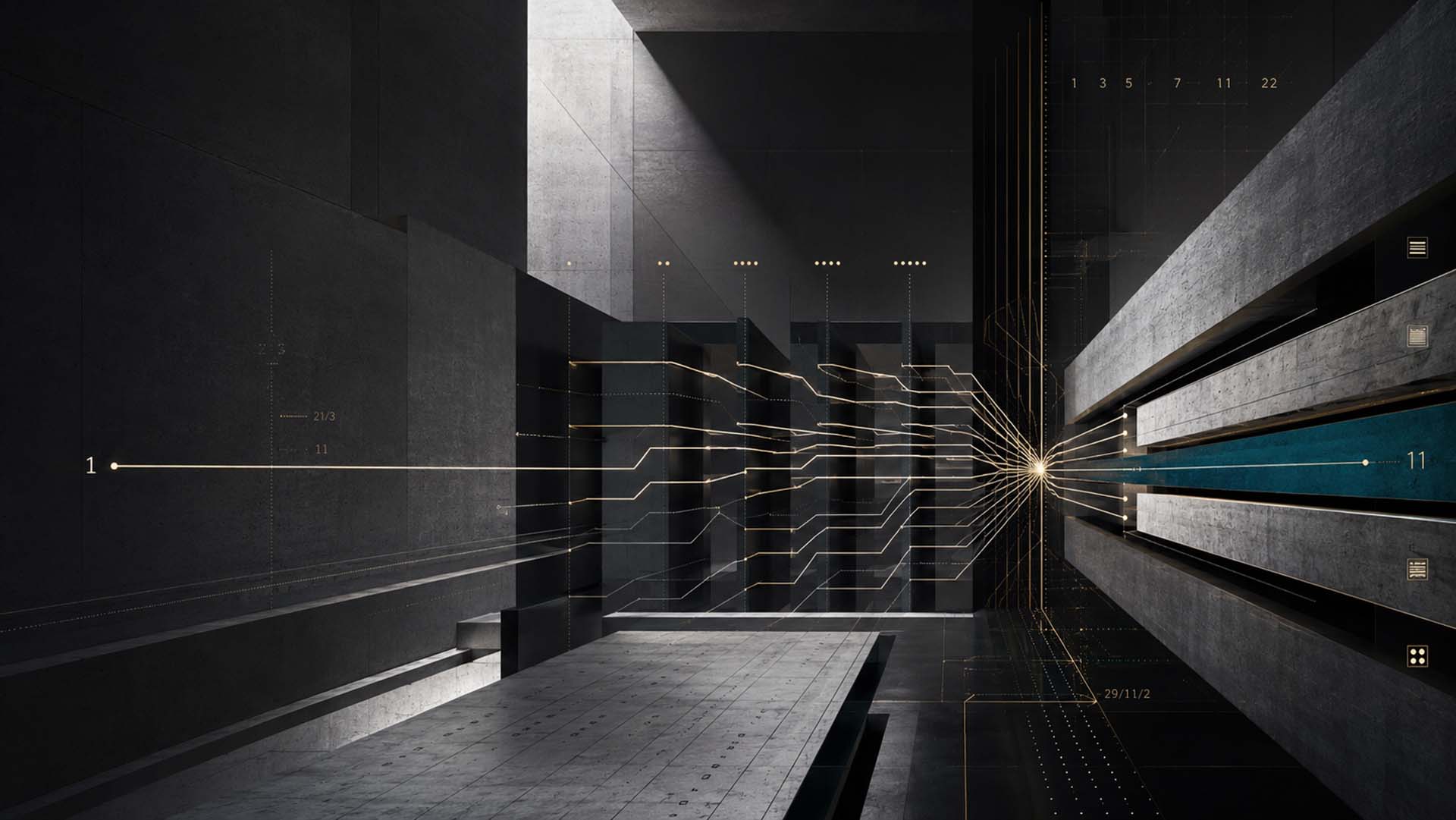
Year → Quarter → Month → Week → Day
And running through those timescales were different dimensions of the same person.
Personal. Professional. Physical. Emotional.
Chris was no longer building a forecast. He was beginning to build a timeline.
Then Chris Started Looking for the Overlaps
More data was not the real objective. The interesting part was what happened when the layers were compared. One example in the historical paper uses Ellen DeGeneres.
Within the model, 2021 was calculated as a Number 5 personal year for her. When Chris calculated each month individually, September also produced a Number 5 personal profile: 41/5.
Year and month had therefore arrived at the same reduced number independently.
Chris described this as synchronicity or amplification. The same principle appears elsewhere in the paper.
For Kamala Harris, the model calculated a Master Number 11 shadow-personal year for 2021. September was independently calculated as a 29/11/2 shadow-personal month.
Again:
Year 11 → Month 11
The historical interpretation focused on what Number 11 was believed to mean. But from today’s research perspective, something else is arguably more important.
Chris was looking for alignment between timescales. A number appearing once might be ordinary within the system.
What caught his interest was the moment the same structure appeared again in another independently calculated layer.
That idea, recurrence across layers, would later surface repeatedly throughout the Human Futurist archive.
One Day Could Contain Several Timelines
Then the research became even more granular.
In another example, Chris calculated his own personal daily sequence for December 2020.
His historical model identifies Number 1 as significant within his underlying architecture. When the December daily profile was calculated, Number 1 appeared on the:
9th, 18th, and 27th. Three separate days within the month.
The original article interpreted those dates as periods when the Number 1 influence would be particularly relevant personally. But again, the contemporary research question is more interesting than the historical interpretation.
Chris was beginning to treat time as something that could be progressively resolved.
Zoom out and there is a year. Move closer and there are quarters. Closer again: months. Then weeks. Then individual days.
And at every resolution the model could potentially be compared back against the person’s underlying architecture.
That is a considerable conceptual leap from: “What is my number?” to: “What is happening across my architecture now?”
This Is Where Forecasting Became Human Futurology
This article becomes particularly important when it is read alongside Chris’s earlier argument in The Future of Futurology.
There, he proposed that futures thinking paid enormous attention to technology, markets, industries and global systems while paying relatively little attention to the future at the level of the individual human being.
He called that missing field Human Futurology, or historically, “micro-futurology.”
By then, the proposition was no longer just an idea. It was being developed into a practical forecasting model. If The Future of Futurology asked: What if we could study the human future as well as the external future?
Numerology Forecasts began asking: How much temporal information would we need in order to do it? Chris’s answer was increasingly clear. One number wasn’t enough. One dimension wasn’t enough. And one timescale wasn’t enough.
The emerging model had to follow an individual through changing conditions rather than describing them as though they remained static.
That is why the Archive Analysis identifies Article 194 as one of the clearest transitions from static numerical architecture into multi-timescale temporal modelling.
But More Detail Creates a New Problem
There is, however, another side to this. Eleven datasets provide far more possible information. They also provide far more possible matches.
If you calculate enough years, quarters, months, weeks, days, personal dimensions, professional dimensions and emotional dimensions, eventually something is going to line up.
That creates one of the most important methodological questions now sitting inside the Human Futurist Research Archive.
When does additional resolution reveal genuine signal and when does it merely create more opportunities to find something interesting after the event?
The Archive Analysis describes this as part of an emerging Complexity–Fit Problem.
It is a crucial distinction.
More complex does not automatically mean more predictive. More data does not automatically mean more useful intelligence.
The real test is whether the additional layers improve the model’s ability to discriminate between an ordinary period and an unusually consequential one before the outcome is known.
That takes the research somewhere much more interesting than its original title suggests. It becomes a document about the birth of a research problem.
The Question Changed From “What?” to “When?”
A static profile can attempt to describe what may be important about someone. Temporal modelling introduces another question:
When might it matter?
That is the bridge between the early 365 Pin Code research and the contemporary Intelligent Mathematical Blueprint. Instead of treating an individual as a fixed collection of characteristics, the later Human Futurist proposition increasingly considers the interaction between:
- architecture
- sequence
- timing
- recurrence
- context
- and decision.
This does not mean the historical forecasting claims have been validated. They have not.
Some statements in the original article are far more certain than contemporary research standards would justify. The source repeatedly describes particular future experiences as effectively predetermined. Those historical claims belong in the archive, but they should not simply be repeated today as established fact.
The more valuable proposition survives without them.
If different parts of an individual’s architecture can be calculated independently across different timescales, can periods of unusually dense alignment be identified?
And if they can: do those periods consistently correspond with meaningful changes, pressures, opportunities or decisions at rates greater than ordinary periods?
That can be tested.
The Bigger Idea Hidden Inside “Numerology Forecasts”
The original article presented eleven ways to forecast. The archive now reveals something larger hiding underneath them.
Chris was beginning to turn a static system into a dynamic one.
- Profile became timeline.
- Timeline became multiple timelines.
- Multiple timelines created opportunities to look for recurrence.
- Recurrence raised the possibility of convergence.
- Convergence created the possibility of identifying periods that might deserve closer attention.
- And that leads directly towards contemporary Human Futurist decision intelligence.
Not: “This number tells you exactly what will happen.”
But something potentially far more useful:
“Several independently calculated parts of this model are becoming unusually concentrated around this period. Should we pay closer attention?”
That is a very different proposition. And it may ultimately be the more important one.
The question was no longer simply what a person might be like. It was becoming: What changes when you put the person on a timeline?
And once Chris began asking that question, there was no reason to stop at the year.
From the Human Futurist Research Archive
This contemporary article revisits the historical study Numerology Forecasts, developed during the 365 Pin Code period around 2020–2021. The original research explored eleven forecasting datasets spanning annual, quarterly, monthly, weekly and daily periods across personal, professional and shadow/emotional dimensions. Its enduring importance lies in the transition it records: from static numerology towards the multi-layer temporal modelling that would later contribute to Human Futurology and the Intelligent Mathematical Blueprint.
Share This Article, Choose Your Platform!
Related Posts


From understanding decisions to informing them.
Beyond the Research
The Business & Leadership archive examines consequential decisions after they have happened.
The Intelligent Mathematical Blueprint and Private Advisory take the underlying Human Futurist thinking into a different environment: helping leaders examine the circumstances surrounding decisions that have yet to be made.