Relationships • Polarity • Influence
Human Dynamics
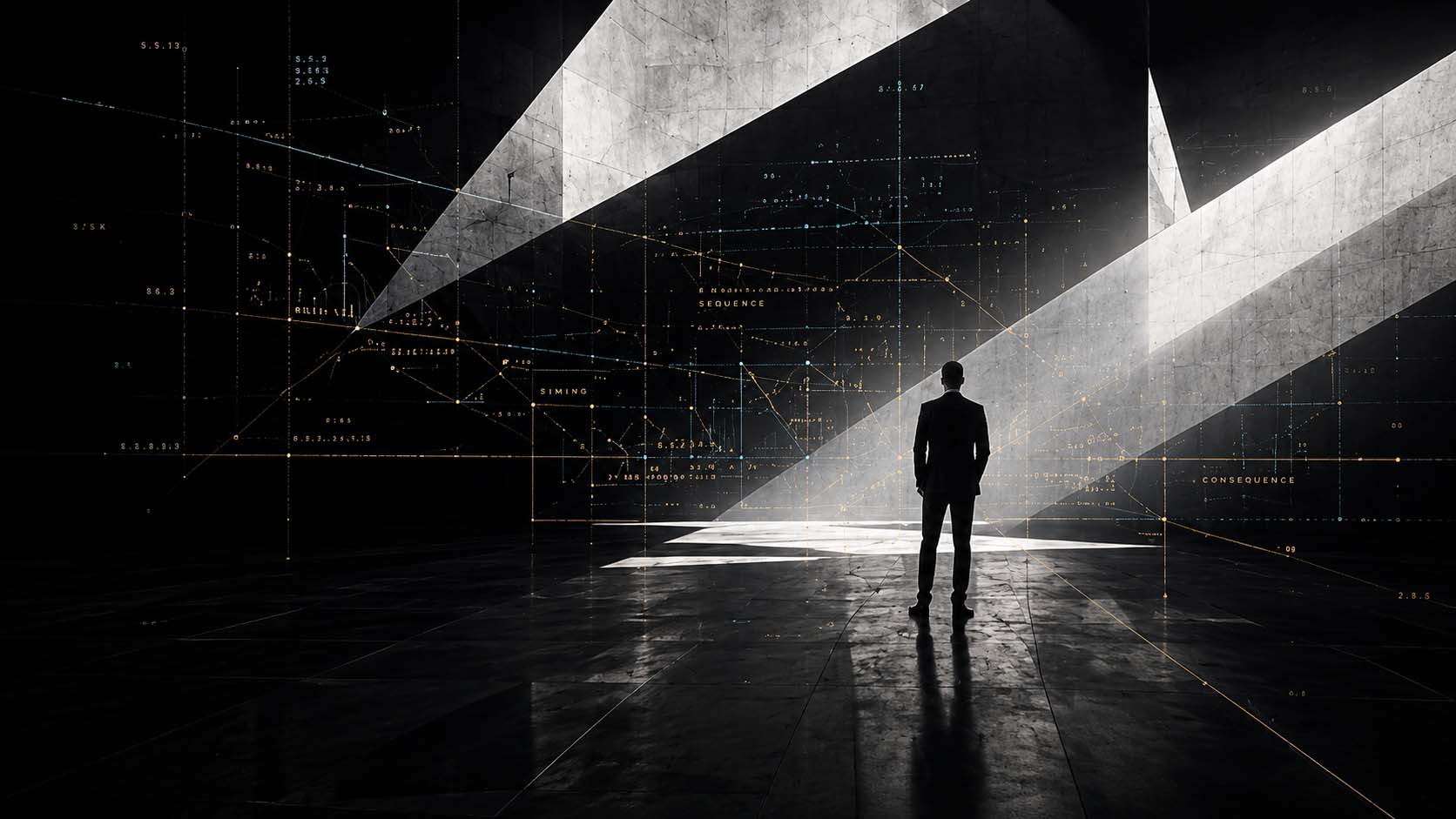
The Space Between People
Human dynamics are rarely explained by one person alone. The deeper patterns emerge through attraction, tension, influence, polarity and the systems people create together.
Relationships. Behaviour. Communication. Consequence.
Why can two people who work brilliantly together eventually become unable to share the same room? Why does one relationship create stability while another repeatedly produces friction? Why can the same personality trait attract us to someone at first — and later become the very thing that drives us apart?
And why can one sentence have almost no consequence when spoken privately, yet become career-defining when said from a position of enormous influence?
Human behaviour rarely happens in isolation. We affect one another. We adapt, react, compete, cooperate, misread, influence, withdraw, connect and sometimes collide.
The human behaviour and relationship research within this collection examines what becomes visible when Chris Styles moves beyond studying the individual and starts looking at what happens between people.

Relationships • Polarity • Influence
Human Dynamics
The Space Between People
Relationships. Behaviour. Communication. Consequence.
Human dynamics are rarely explained by one person alone. The deeper patterns emerge through attraction, tension, influence, polarity and the systems people create together.
Why can two people who work brilliantly together eventually become unable to share the same room? Why does one relationship create stability while another repeatedly produces friction? Why can the same personality trait attract us to someone at first — and later become the very thing that drives us apart?
And why can one sentence have almost no consequence when spoken privately, yet become career-defining when said from a position of enormous influence?
Human behaviour rarely happens in isolation. We affect one another. We adapt, react, compete, cooperate, misread, influence, withdraw, connect and sometimes collide.
The human behaviour and relationship research within this collection examines what becomes visible when Chris Styles moves beyond studying the individual and starts looking at what happens between people.
People. Interaction. Tension. Change.
What Happens Between Us Can Matter as Much as Who We Are
A relationship is not simply two individual people standing beside one another.
Every partnership creates something additional: expectations, habits, power balances, emotional responses, communication patterns and ways of behaving that may not appear when either person is viewed independently.
Human Dynamics investigates that additional layer.
It asks whether relationships, teams and working partnerships can develop their own recognisable architecture — and whether understanding that architecture might help us see conflict, compatibility, communication risk and change more clearly.
Five Relationships. Five Different Questions.
The relationship changes everything, revealing dynamics that neither person creates alone.

Different people. One deeper human problem.
These five studies look very different.
- One compares two marriages. Another investigates the architecture of attraction and conflict.
- One recorded a relationship-breakdown forecast before the final outcome was known. Another examines how a successful television partnership could contain both extraordinary chemistry and the potential for intense competition.
- And one asks what happens when influence multiplies the consequences of communication.
What connects them is a deceptively simple question:
- What becomes visible when we stop analysing people independently and start studying the system created between them?
- Look at the individual. Then look at the other person. Then look at what happens when the two interact.
- That third view is where some of the most interesting Human Dynamics research begins.
From Compatibility to Relationship Intelligence
The Relationship as a Third System
When two people connect, the relationship may become an analytical system of its own.
Historical Human Futurist research compared Nicole Kidman’s relationship architecture with Tom Cruise and Keith Urban. The two combined models produced strikingly different structures. The enduring value of the case is not a celebrity compatibility verdict, but a larger proposition: perhaps the interaction between two people contains information that neither individual profile can reveal alone.
The Question
Can a relationship be modelled as a distinct Third System, rather than understood only through the two people inside it?
What Chris Found
Chris’s historical Co-Joined Numerology model treated the relationship itself as something worth analysing.
With Kidman and Cruise, the combined architecture showed repeated 4/5 polarity. With Kidman and Urban, both the Physical and Emotional Life Paths produced the exact 27//9 sequence.
The significance lies in the contrast: the same individual produced two very different relationship architectures.
The Relationship Between the People
An Early Co-Joined Model of Attraction, Conflict and Growth
An early model asked what two people create together that neither carries alone.
This research moved beyond conventional compatibility and into relationship architecture. By combining two individual profiles, Chris Styles began exploring whether attraction, conflict and growth might emerge from the interaction itself, an early step towards the Human Futurist idea of the relationship as a Third System.
The Question
Can a combined relationship model reveal interaction patterns that cannot be seen by analysing either person independently?
What Chris Found
In the article’s extreme illustrative example, four separately derived relationship positions converged on the same reduced result. But the source also showed that same Family-position result in two real-world couples it described very differently, suggesting that the pattern alone could not determine outcome.
Why It Matters
That tension is precisely what makes the research useful today. Relationship intelligence may be less about declaring people compatible or incompatible and more about identifying where a particular pairing creates attraction, friction or developmental pressure — before those dynamics become consequences.
Timing Relationship Breakdown Before the Outcome Was Known
Kim Kardashian and Kanye West
When a Forecast Becomes More Valuable Because the Outcome Can Be Audited
In 2020, while the Kardashian–West marriage was visibly under strain but before Kim Kardashian filed for divorce, Chris Styles identified 2021–2022 as a critical relationship-ending window. What happened next turned the forecast into one of the Human Dynamics archive’s strongest predictive-audit cases.
The Question
Can a model distinguish between relationship pressure and conditions associated with an eventual relationship-ending outcome?
What Chris Found
Chris identified 2021 with significant emotional endings and forecast that the transition towards a more formal or physical ending would occur in 2022. Kardashian filed for divorce in February 2021; she and West were declared legally single in March 2022 and reached a settlement in November 2022.
Why It Matters
The deeper value is not simply that the timing corresponded closely with what happened. The case introduced an important distinction between influence and outcome — and raises the possibility that relationship intelligence could move beyond predicting breakdown towards identifying when intervention might matter most.
Polarity Under Pressure
Phillip Schofield, Holly Willoughby and the Breakdown of a High-Profile Working Relationship
When Chemistry Becomes Competition
Phillip Schofield and Holly Willoughby appeared to have one of British television’s most natural working partnerships. But beneath that chemistry, Chris Styles found a striking structural mirror alongside several important similarities, raising a more complicated question about what happens when complementarity comes under pressure.
The Question
Does creative breakthrough emerge as one isolated moment, or as the visible result of a much longer developmental pattern?
What Chris Found
Chris found a striking mirrored relationship structure across the pair. Yet beneath that polarity were several shared characteristics, suggesting that Schofield and Willoughby were not simply opposites, and that some of the same qualities supporting their chemistry may also have intensified tension under pressure.
Why It Matters
The case moves beyond simple compatibility. The same qualities that help two people complement one another may, under different conditions, amplify competition, friction or conflict. That creates a more practical question for Polarity Management: can relational pressure be recognised early enough to change what happens next?
The Influence Multiplier
Tony Robbins, #MeToo and the Risk Architecture of Public Communication
The bigger the platform, the greater the consequence carried by a single unexamined message.
A 2018 exchange placed one of the world’s most recognisable communicators inside a controversy about the very thing his career depends upon: communication. Chris Styles noticed a striking timing transition around the event, opening a wider Human Futurist question about influence, adaptation and reputational consequence.
The Question
Does the consequence potential of communication increase predictably when high influence, sensitive context and heightened personal timing converge?
What Chris Found
Chris identified a concentrated 2018 pattern in Robbins’s timing model, with a particularly striking March-to-April transition around the seminar exchange, wider circulation and apology. Communication also appeared as a name-derived developmental theme, although that finding depends on an inferred, unverified birth name.
From Compatibility to Relationship Intelligence
The Relationship as a Third System
When two people connect, the relationship may become an analytical system of its own.
Historical Human Futurist research compared Nicole Kidman’s relationship architecture with Tom Cruise and Keith Urban. The two combined models produced strikingly different structures. The enduring value of the case is not a celebrity compatibility verdict, but a larger proposition: perhaps the interaction between two people contains information that neither individual profile can reveal alone.
The Question
Can a relationship be modelled as a distinct Third System, rather than understood only through the two people inside it?
What Chris Found
Chris’s historical Co-Joined Numerology model treated the relationship itself as something worth analysing.
With Kidman and Cruise, the combined architecture showed repeated 4/5 polarity. With Kidman and Urban, both the Physical and Emotional Life Paths produced the exact 27//9 sequence.
The significance lies in the contrast: the same individual produced two very different relationship architectures.
The Relationship Between the People
An Early Co-Joined Model of Attraction, Conflict and Growth
An early model asked what two people create together that neither carries alone.
This research moved beyond conventional compatibility and into relationship architecture. By combining two individual profiles, Chris Styles began exploring whether attraction, conflict and growth might emerge from the interaction itself, an early step towards the Human Futurist idea of the relationship as a Third System.
The Question
Can a combined relationship model reveal interaction patterns that cannot be seen by analysing either person independently?
What Chris Found
In the article’s extreme illustrative example, four separately derived relationship positions converged on the same reduced result. But the source also showed that same Family-position result in two real-world couples it described very differently, suggesting that the pattern alone could not determine outcome.
Why It Matters
That tension is precisely what makes the research useful today. Relationship intelligence may be less about declaring people compatible or incompatible and more about identifying where a particular pairing creates attraction, friction or developmental pressure — before those dynamics become consequences.
Timing Relationship Breakdown Before the Outcome Was Known
Kim Kardashian and Kanye West
When a Forecast Becomes More Valuable Because the Outcome Can Be Audited
In 2020, while the Kardashian–West marriage was visibly under strain but before Kim Kardashian filed for divorce, Chris Styles identified 2021–2022 as a critical relationship-ending window. What happened next turned the forecast into one of the Human Dynamics archive’s strongest predictive-audit cases.
The Question
Can a model distinguish between relationship pressure and conditions associated with an eventual relationship-ending outcome?
What Chris Found
Chris identified 2021 with significant emotional endings and forecast that the transition towards a more formal or physical ending would occur in 2022. Kardashian filed for divorce in February 2021; she and West were declared legally single in March 2022 and reached a settlement in November 2022.
Why It Matters
The deeper value is not simply that the timing corresponded closely with what happened. The case introduced an important distinction between influence and outcome — and raises the possibility that relationship intelligence could move beyond predicting breakdown towards identifying when intervention might matter most.
Polarity Under Pressure
Phillip Schofield, Holly Willoughby and the Breakdown of a High-Profile Working Relationship
When Chemistry Becomes Competition
Phillip Schofield and Holly Willoughby appeared to have one of British television’s most natural working partnerships. But beneath that chemistry, Chris Styles found a striking structural mirror alongside several important similarities, raising a more complicated question about what happens when complementarity comes under pressure.
The Question
Does creative breakthrough emerge as one isolated moment, or as the visible result of a much longer developmental pattern?
What Chris Found
Chris found a striking mirrored relationship structure across the pair. Yet beneath that polarity were several shared characteristics, suggesting that Schofield and Willoughby were not simply opposites, and that some of the same qualities supporting their chemistry may also have intensified tension under pressure.
Why It Matters
The case moves beyond simple compatibility. The same qualities that help two people complement one another may, under different conditions, amplify competition, friction or conflict. That creates a more practical question for Polarity Management: can relational pressure be recognised early enough to change what happens next?
The Influence Multiplier
Tony Robbins, #MeToo and the Risk Architecture of Public Communication
The bigger the platform, the greater the consequence carried by a single unexamined message.
A 2018 exchange placed one of the world’s most recognisable communicators inside a controversy about the very thing his career depends upon: communication. Chris Styles noticed a striking timing transition around the event, opening a wider Human Futurist question about influence, adaptation and reputational consequence.
The Question
Does the consequence potential of communication increase predictably when high influence, sensitive context and heightened personal timing converge?
What Chris Found
Chris identified a concentrated 2018 pattern in Robbins’s timing model, with a particularly striking March-to-April transition around the seminar exchange, wider circulation and apology. Communication also appeared as a name-derived developmental theme, although that finding depends on an inferred, unverified birth name.
These studies show Human Dynamics becoming something much more interesting than personality analysis.
Why These Five?
The strongest Human Dynamics studies do something beyond describing two people.
- They reveal what becomes visible when two individual patterns are studied together.
- They show how the same dynamic can create connection in one context and conflict in another.
- They examine whether periods of relationship pressure or change can be identified before the outcome is known.
- They explore how complementarity and competition can exist within the same successful partnership.
- Or they reveal how influence can magnify the consequences of communication.
Together, they move across:
INDIVIDUAL → INTERACTION → RELATIONSHIP → PRESSURE → CONSEQUENCE
They earn Featured Research status because each case opens a question that matters far beyond the people who originally inspired it.
Six Themes. One Innovation Landscape.
Understanding people becomes more useful when we also understand what happens between them.
Human Dynamics stretches from intimate relationships to professional partnerships, public communication and personal change...
Together, these themes reveal that human outcomes are rarely produced by personality alone.
Human Dynamics Never Stays Inside One Collection
Relationships appear everywhere consequential decisions are made.
Change the setting and the human dynamics remain.
- A captain and coach in High Performance can become a Third System.
- Two political leaders in Political Leadership can be better understood comparatively than independently.
- A founder relationship inside Business & Leadership may combine authority, ambition, trust and competing decision styles.
A period of relationship breakdown can become part of Patterns of Consequence when a prior risk proposition is preserved and later audited.
And the evolution from individual analysis towards interconnected systems belongs partly to Foundational Research because it changes how the Human Futurist methodology itself thinks.
Human Dynamics therefore sits underneath much of the wider archive. Wherever people influence other people, the interaction becomes part of the outcome.
HUMAN DYNAMICS — RELATIONAL INTELLIGENCE
The Most Important Person in a Relationship May Be the Relationship
Traditional compatibility analysis starts with two people.
- Person A has one set of characteristics.
- Person B has another.
Compare them and decide whether they fit. But something important may be missing.
When two people interact repeatedly, they create routines, expectations, emotional triggers, power structures, communication habits and shared responses that belong fully to neither person.
The relationship begins behaving like a system. That is the proposition sitting behind some of the strongest Human Dynamics research.
PERSON A + PERSON B + CONTEXT → THIRD SYSTEM
- The Nicole Kidman work provides the clearest early example.
- The Schofield–Willoughby study adds polarity.
- The Kardashian–West research adds timing and consequence.
Together they raise a much more useful question than:
“Are these two people compatible?”
The better question may be:
“What system do these two people create together, and how does that system behave when circumstances change?”
How people shape each other’s behaviour, decisions and outcomes.
From Knowing the People to Understanding the Interaction
That shift opens a much wider research field.
Couples are one environment.
But the same proposition can be explored in founder partnerships, boards, leadership teams, sporting combinations, families and adviser–client relationships.
The future opportunity is to compare many interacting pairs using clearly defined outcomes.
Not simply: did the relationship survive?
But:
- How was conflict handled?
- Did communication deteriorate?
- Was trust maintained?
- Did the partnership improve decision quality?
- Did one person’s strength compensate for — or amplify — the other’s vulnerability?
The relationship itself becomes something worth studying.
The Most Useful Warning Is the One That Changes What Happens Next
Human Dynamics, From Pattern to Intervention
The strongest Human Dynamics studies do something beyond describing two people.
Identifying a relationship risk after a breakdown is interesting. Identifying it beforehand is more difficult.
But even a successful forecast has limited practical value if nobody can do anything with it. That is where the contemporary Human Futurist question changes.
Earlier research often asked: What is going to happen?
Human Dynamics can increasingly ask: What could knowing this change?
That movement is visible across the collection.
- A communication-risk period could trigger greater reflection before a major public statement.
- A recurring conflict pattern could prompt a difficult conversation earlier.
- A partnership showing increased pressure could introduce independent mediation or clearer decision boundaries.
- A leader whose influence multiplies communication consequence could build additional review into high-risk decisions.
OBSERVE → IDENTIFY RISK → CREATE FRICTION → REFLECT → CHOOSE → REVIEW
The objective is not to eliminate human uncertainty. Nor is it to claim that a model can determine whether two people should stay together, separate, speak or remain silent. The stronger ambition is decision support.
THE BETTER QUESTION
Can Foresight Improve the Interaction?
Future Human Dynamics research should therefore move beyond celebrity relationships and retrospective interpretation.
- It should test real dyads, teams and partnerships against predefined measures.
- It should distinguish correlation from causation.
- It should compare relationships where patterns appear against relationships where they do not.
- And where possible, it should ask whether an intervention based on advanced insight changed anything measurable.
Because the ultimate value of relationship intelligence is not predicting the argument. It is discovering whether the argument might have been handled differently.
Every relationship creates consequences that neither person creates alone.
Follow the Human Connection
A marriage. A friendship. A founder partnership. A captain and coach. A television pairing. A leader and adviser. A person addressing millions of strangers.
Each creates an interaction between individual architecture, circumstance, communication and choice.
- Sometimes that interaction produces extraordinary alignment.
- Sometimes friction.
- Sometimes transformation.
- Sometimes consequence.
The Human Dynamics Archive follows those connections — not to reduce people to formulas, but to ask what becomes visible when we study the space between them.
From understanding decisions to informing them.
Beyond the Research
The Business & Leadership archive examines consequential decisions after they have happened.
The Intelligent Mathematical Blueprint and Private Advisory take the underlying Human Futurist thinking into a different environment: helping leaders examine the circumstances surrounding decisions that have yet to be made.