Four months. Two repeating patterns. Three unusual connections. And research into Donald Trump that began years before this election.
What if the most consequential chapter of the 2026 US midterms begins after the votes have been counted?
Not on election night. Not when the winners and losers are announced. But in the weeks and months that follow.
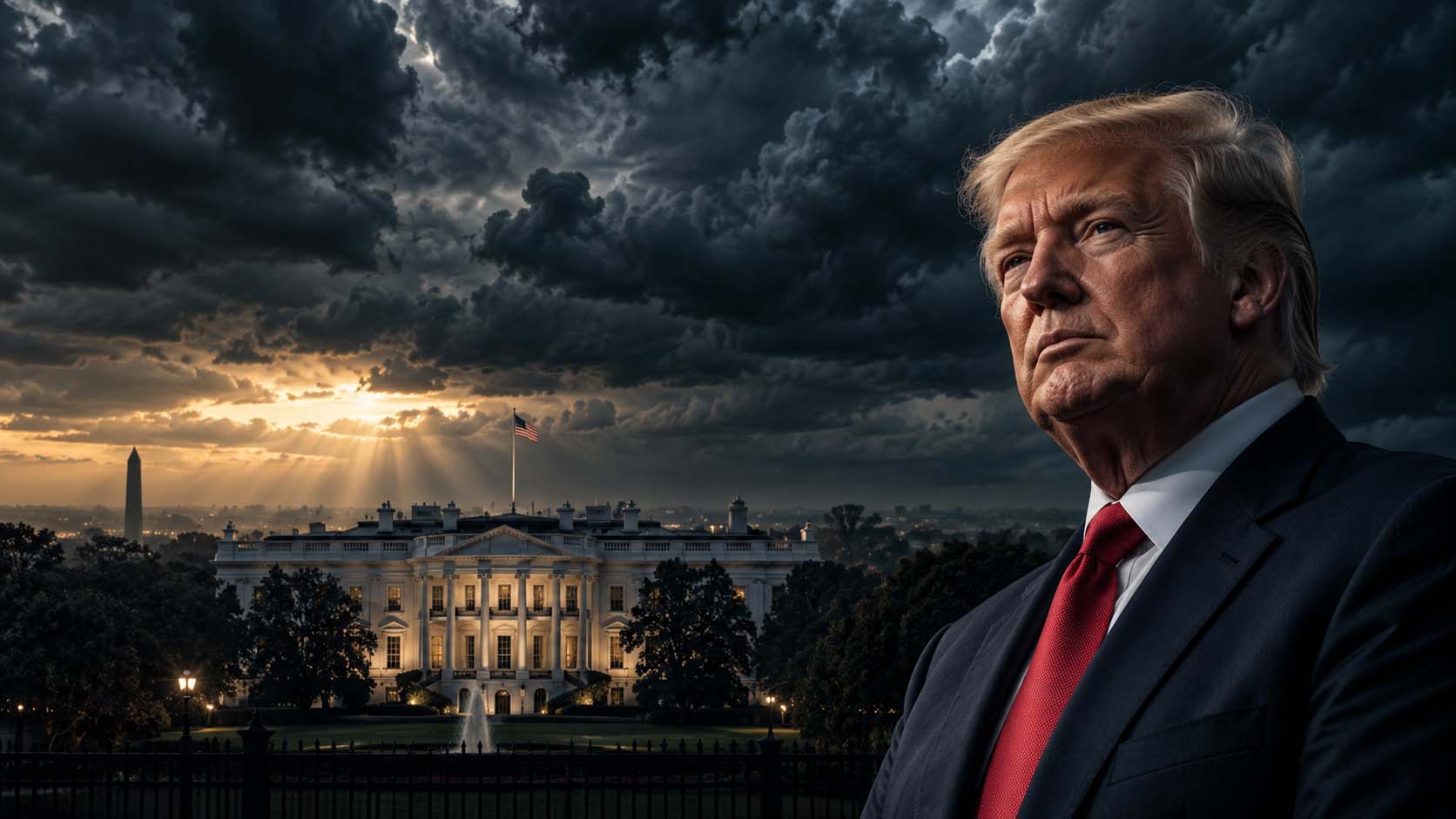
America is approaching another significant political moment. The midterm elections will determine the balance of power in Congress and could reshape the political landscape for the remainder of Donald Trump’s presidency.
But what if November is only the beginning? Years before the 2026 elections, I was examining patterns in Donald Trump’s life that extended well beyond his first presidency.
Some of those patterns now bring us to an unusual four-month period.
November 2026. December 2026. January 2027. February 2027.
Two distinct sequences repeat across those four months. When Trump’s wider 2027 pattern comes into the picture, three further connections emerge.
Coincidence? Perhaps.
But what if the more interesting question is what happens next?
Sometimes the significance of earlier research becomes clearer when the future draws closer.
The Research Did Not Begin in 2026
On 11 June 2018, I published an analysis of Donald Trump examining the patterns I had identified in his life and the challenges I believed lay ahead.
At the time, Trump was serving his first term as President of the United States.
The research was not limited to the immediate political circumstances. It examined his wider personal and professional patterns and how these might develop over time.
In October 2019, I returned to the subject.
That analysis included year-by-year sequences extending beyond 2027, with particular attention drawn to several periods of potential difficulty.
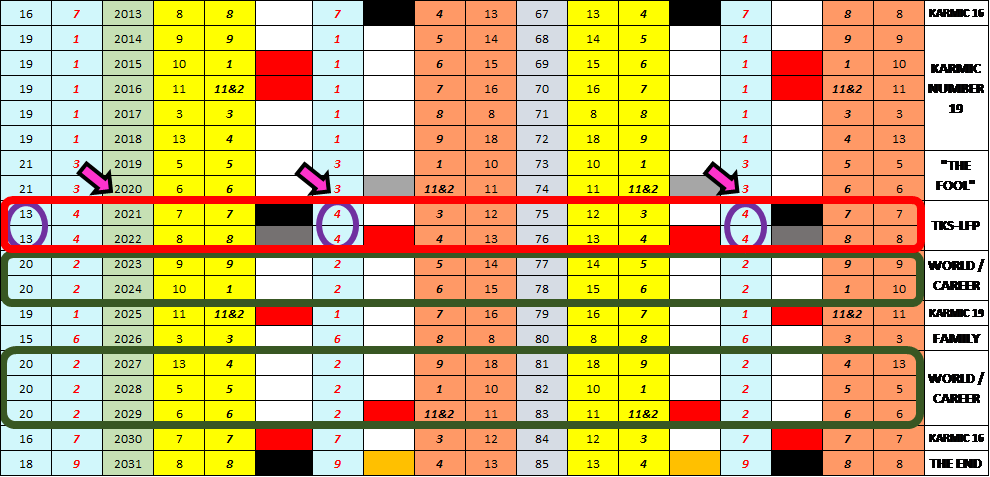
Original research chart published by Chris Styles in October 2019. The year-by-year analysis extended to 2031, with several future periods highlighted, including years beyond Trump’s first presidency.
Read the original research: For Donald Trump 2020 Is Coded to Deliver Huge Trouble.
The research was subsequently revisited during the 2020 presidential election. These were not calculations produced in response to the approaching 2026 midterms. The underlying patterns had already been documented years earlier.
The earlier articles concentrated on the events and circumstances of their time. Today, I want to draw attention to a later period within that same body of research.
A period that is now approaching, and one that raises some uncomfortable questions.
Why do November and January reflect one another, while December and February tell a different story?
Four Months. Two Patterns. One Unusual Repetition.
The first thing that caught my attention was the relationship between four consecutive months.
Look at the pattern:
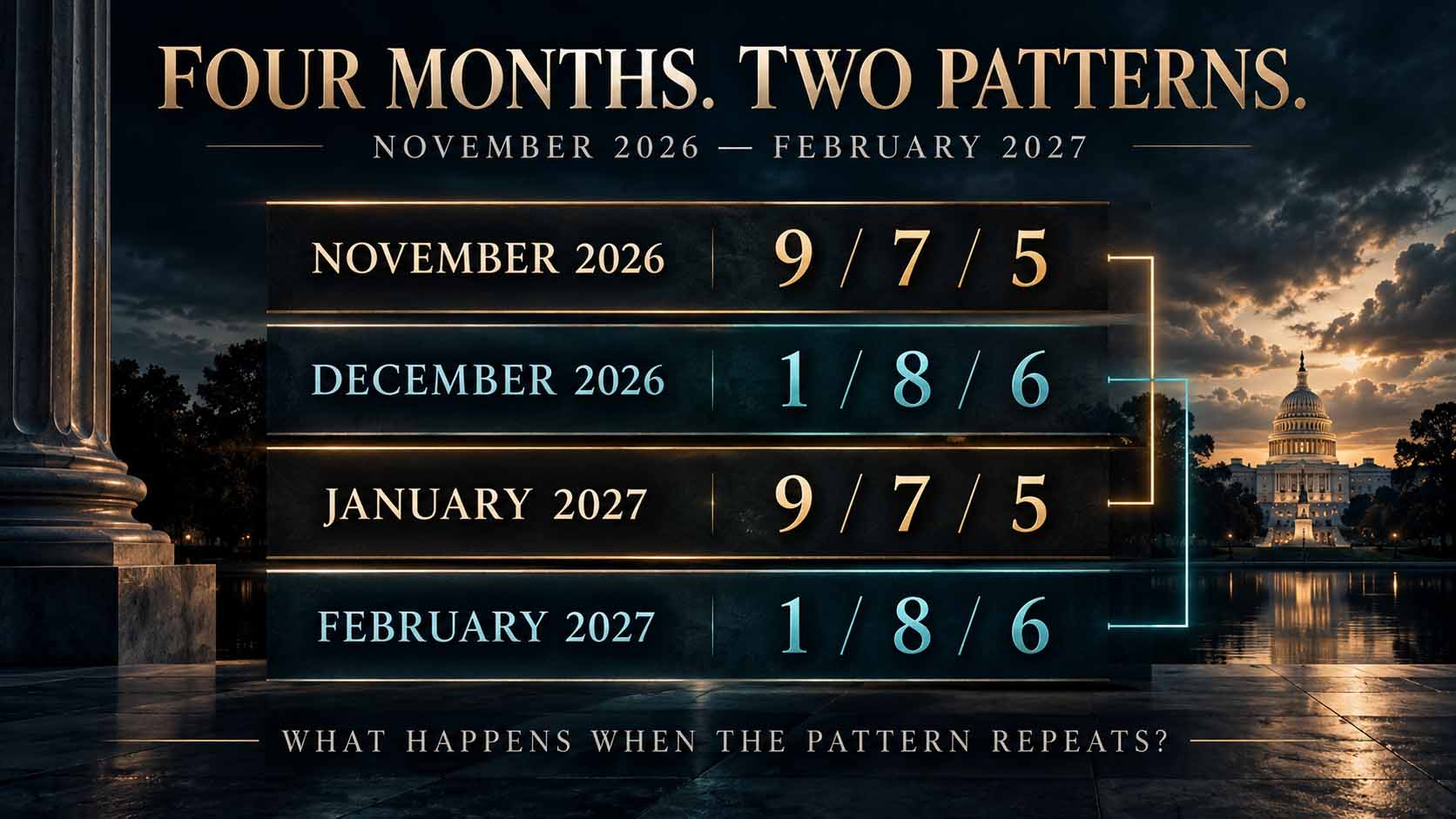
- November 2026 9 / 7 / 5
- December 2026 1 / 8 / 6
- January 2027 9 / 7 / 5
- February 2027 1 / 8 / 6
November and January share the same sequence. December and February share another. Two patterns, alternating across four consecutive months and spanning the transition from 2026 into 2027.
On their own, numbers are simply numbers.
The interesting questions begin when we consider the themes associated with them within the Intelligent Mathematical Blueprint (IMB).
The 9 / 7 / 5 combination brings together themes of endings, matters that may not yet be fully visible, and disruption or unexpected change.
The 1 / 8 / 6 combination shifts the emphasis towards personal authority, power, control and relationships.
These are different sets of pressures. One concerns what may be ending, emerging or changing. The other concerns how individuals respond when their authority, influence or relationships come under strain.
Now place those themes against the backdrop of an American midterm election.
- What happens when political change creates uncertainty?
- What happens when powerful individuals feel their influence slipping?
- And what happens when the consequences of decisions made in November begin to surface in January and February?
That is why this four-month period interests me. Not simply because the sequences repeat, but because of the questions their timing raises.
Political victories and defeats happen on election night. Their human consequences can take considerably longer to unfold.
The Election May Be Over. The Consequences May Not Be.
Midterm elections are often described in terms of seats won, seats lost and which party controls Congress.
Those outcomes matter. But elections are also deeply personal for the people whose authority and political futures depend upon them. They can alter relationships, expose disagreements, shift loyalties and challenge the assumptions on which political leaders have built their strategies. For a president, the consequences may reach far beyond the election result itself.
Consider the possible developments following November 2026.
- Could changes in congressional power place greater pressure on Trump’s administration?
- Could relationships within his political circle become increasingly strained?
- Might disagreements that have remained beneath the surface become more visible?
- Could the months following the election become more politically consequential than the election itself?
These are questions, not conclusions.
But they are the kinds of questions that arise when I examine the four-month pattern.
And the research does not stop there.
An unusual relationship between 9 and 11 raises another question: why does the same pairing appear three times?
Three Connections Within Trump’s 2027 Pattern
Trump’s wider pattern for 2027 carries the sequence: 47//11//2
Within the same year’s broader mathematical structure, the number 9 appears in three separate positions.
Each of those positions creates a symbolic relationship with the annual 11.
- Three separate positions.
- The same 9–11 pairing.
- Three connections within one year.
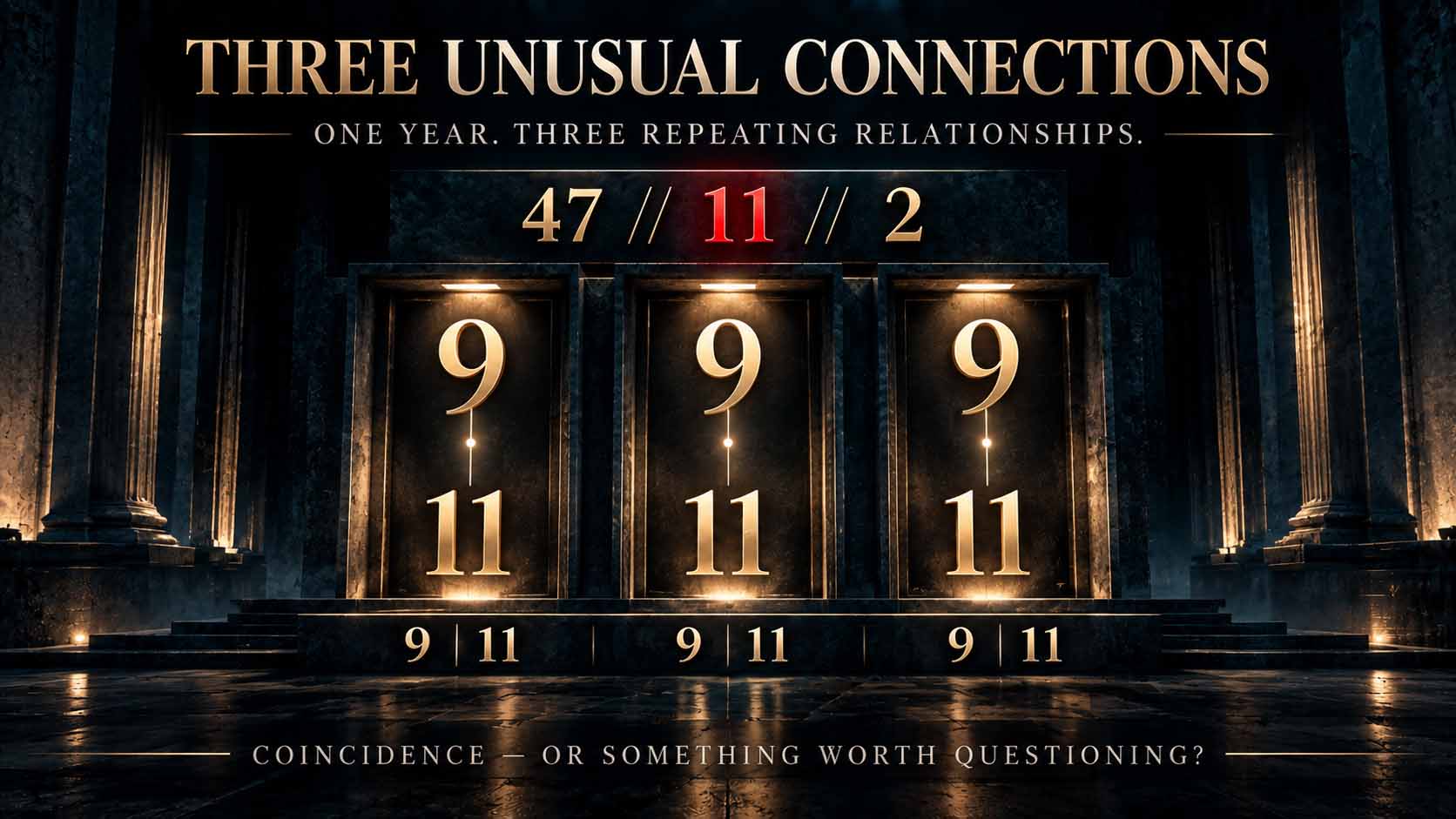
Arranged together, those two numbers form 911.
It is a striking association, particularly given the place that number holds in American history. But the research is not suggesting that the events of 11 September 2001 will be repeated, nor does the pairing identify a specific future event.
What interests me is the recurrence of the relationship within the same year.
- Why does it appear in three separate places?
- Why does it emerge within a period already showing unusual monthly repetition?
- And could the themes associated with these patterns become relevant to the political and personal pressures surrounding Trump’s presidency?
There is also a further curiosity.
The digits of 2027 add together to make 11: 2 + 0 + 2 + 7 = 11.
The final two digits, 27, add together to make 9: 2 + 7 = 9.
Once again, the symbolic relationship between 9 and 11 appears.
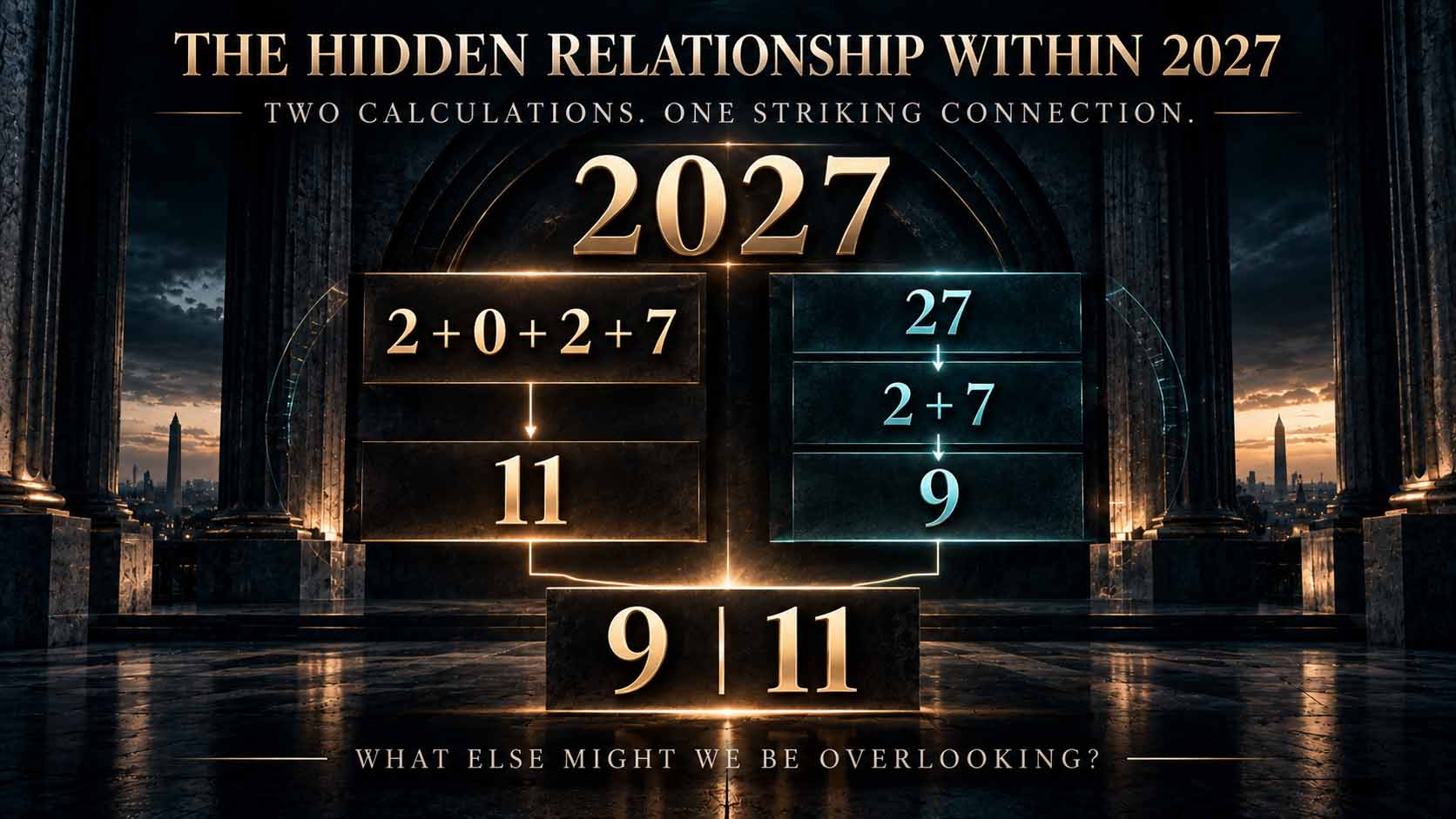
This is a different way of looking at the year, rather than an independent prediction. Nevertheless, it adds another layer to the questions raised by the wider pattern.
The point is not to attach a predetermined event to a number.
It is to recognise a recurring relationship and ask whether the period deserves closer attention.
The greatest political challenges are not always external. Sometimes they begin with how leaders respond to uncertainty.
What Happens When Power Comes Under Pressure?
Leadership is tested in many ways. Some challenges are visible: elections, investigations, public criticism, political opposition.
Others are less obvious.
- The strain on relationships.
- The fear of losing control.
- The difficulty of accepting change.
- The consequences of decisions made under pressure.
These human dimensions of leadership are central to why I find the 2026–2027 period so interesting. The repeating monthly patterns draw attention to change, endings, disruption, authority, control and relationships.
Those themes are not confined to politics. They are familiar to anyone who has experienced a significant personal or professional turning point. But when they intersect with the responsibilities and influence of an American president, the potential consequences become much wider.
Could the coming months challenge Trump’s approach to leadership? Might the political landscape force decisions that carry consequences far beyond Washington? Could personal relationships, political alliances or established structures face unexpected strain? And if several pressures emerge at the same time, how might they influence the decisions made by those in power?
The research invites us to consider these possibilities before events unfold.
The real significance of a pattern may lie in the questions it encourages us to ask before the outcome is known.
A Political Watershed — Or Just Another Election Cycle?
Every election produces uncertainty. Every presidency encounters challenges. And political commentators routinely describe elections as defining moments.
So what makes this period different?
For me, it is the combination of circumstances and timing. Four consecutive months displaying two repeating sequences. A transition from one year into another. An annual pattern containing three separate 9–11 relationships. And a body of research whose underlying calculations were documented years before the present political moment.
Taken together, these observations make November 2026 through February 2027 a period I believe warrants particular attention.
Does that mean America is heading towards a political crisis? Not necessarily. Does it mean Trump’s presidency will experience a dramatic turning point? That remains to be seen. But could this period become important for understanding how the 2026 midterms influence the remainder of his presidency?
That is a question worth asking. And it is one I intend to revisit as events unfold.
Foresight begins with noticing what others may not yet be looking at.
The Most Interesting Questions Are Often Asked Before the Answers Exist
One of the reasons I continue this research is that it encourages me to look beyond the immediate event.
An election is not simply a result. A leadership decision is not simply a moment. A political disagreement is not always an isolated incident.
Events develop within a wider context, and their consequences often emerge over time.
The IMB provides a framework through which I examine recurring patterns, timing and the human experiences associated with them.
It does not make decisions for people. Nor does it remove uncertainty about the future. But it can encourage us to consider possibilities we might otherwise overlook.
As America approaches the 2026 midterms, I am particularly interested in what happens after November.
- Will January and February bring developments that place the preceding months in a different light?
- Will the pressures surrounding political power and personal relationships become more visible?
- Or will this four-month period pass without the significance that the patterns have led me to question?
We do not yet know. And that is precisely why the questions are worth asking now.
What if the most important story of the 2026 US midterms has not yet begun?
About the Research
Chris Styles is the co-founder of Human Futurology and the researcher behind the Intelligent Mathematical Blueprint (IMB), developed through more than 20,000 hours of research.
This article presents his interpretation of recurring mathematical patterns and their possible relevance to contemporary events. It is intended to encourage curiosity, reflection and discussion, rather than assert a predetermined political outcome.
Earlier research referenced:
- America First, or America last Donald Trump? — 11 June 2018.
- For Donald Trump 2020 Is Coded to Deliver Huge Trouble — 3 October 2019.
- US Election: Republicans Trump and Pence — 2020.
These articles form part of the historical research that preceded the current Human Futurist work.
Share This Article, Choose Your Platform!
Related Posts




From understanding decisions to informing them.
Beyond the Research
The Business & Leadership archive examines consequential decisions after they have happened.
The Intelligent Mathematical Blueprint and Private Advisory take the underlying Human Futurist thinking into a different environment: helping leaders examine the circumstances surrounding decisions that have yet to be made.